DTPR for AI: A legibility standard to make AI understandable to everyone
DTPR for AI is a new legibility standard that acts as a translation layer between the dense technical documents produced by model makers and government agencies, and the people these technologies are deployed on.
July 8, 2026
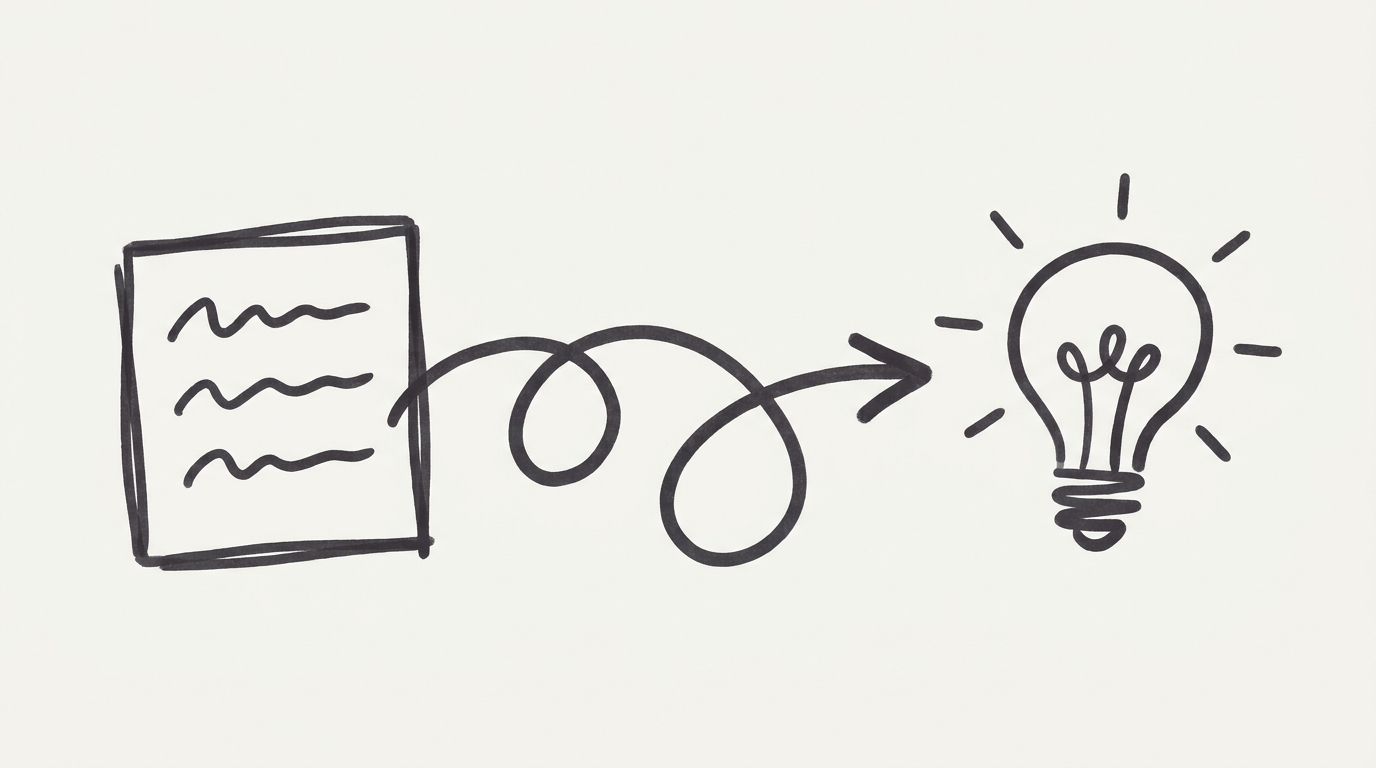
The rapid rise of AI has brought a wave of new regulatory and transparency frameworks meant to describe how these systems work. Techniques like model cards focus on the technical aspects of the technology: the data that was used to train the models, the emergent properties of these models, including their level of alignment, their accuracy, their biases, and their resistance to errors and hallucinations. Alongside these technical descriptions are government standards for disclosing the use of AI and algorithms within the functioning of public institutions. These include the Canada's Algorithmic Impact Assessment or the UK's Algorithmic Transparency Recording Standard. These assessments focus on the risks of deployed systems in relation to the people under the jurisdiction of public authorities. While these assessments capture the relationship between the technology and the public, they, like model cards, are dense, highly technical documents written for experts.
DTPR for AI is a new legibility standard meant to make these technical documents understandable to everyone. It acts as a translation layer between the documents produced by model makers and government agencies, and the people on which these technologies are deployed. It's designed to visually center the most important information, like the use of personally identifiable data, the level of autonomy of the system, or the rights the affected communities have in relation to the deployed system. As Cory Doctorow likes to repeat: it's important to interrogate not just what a technology does, but who it does it for, and who it does it to. DTPR for AI provides the tools to do this.
To answer these questions, DTPR for AI relies on a taxonomy: a structured list of descriptive categories used to classify an AI system. Taxonomies create a shared language—a set of categories and associated elements that stays stable across systems, even as the specifics change. This is what makes taxonomies so powerful as translation tools:
- They compress complexity into something structured enough to navigate for general audiences.
- They are layered, disclosing essential information first but allowing for deeper disclosure if necessary.
- They are comparable across different organizations and contexts.
The challenge of building a taxonomy is to find the right level of abstraction. This means avoiding specific technical terms and identifying the primary questions the public asks about a system. Model cards and government disclosures ask many questions, but they reflect the perspectives of technical and policy experts. With DTPR, we center the questions of the person encountering the AI system, rather than the person buying or building it.
We're not the only ones thinking about this. Rather than starting from scratch, DTPR for AI integrates existing frameworks that make AI more understandable. For example, Narain Jashanmal has proposed what he calls a functional taxonomy for AI, using verbs to describe exactly what an AI system is doing. Saying an algorithmic system is sensing, understanding, generating, or deciding is significantly more legible than just calling it "AI".
Once an AI system is described using actionable verbs, it becomes much easier to map its specific risks. An AI that is used to understand input documents will be susceptible to certain types of harms, as opposed to an AI that is used to make decisions. To catalog these risks, DTPR for AI uses the AI, Algorithmic and Automation Harms Taxonomy, which draws on documented impacts and is released under creative commons share-alike by AIAAIC. The harms taxonomy, unlike many risk taxonomies, describes actual impacts on individuals on which AI systems are deployed, not abstract challenges. It centers the risks of the AI system and who it does it to, not who it does it for.

Finally, DTPR is a visual language. Putting together DTPR categories as icons and elements, we begin to see flows. They can be flows of responsibility: from the creator of the system, to its deployer, to the actions taken by the system and their results. Or flows of data: from the data input into the system, the type of algorithm that runs on this data, and the data output on the other end. By displaying these flows visually–using icons, color, and positioning–DTPR is able to quickly communicate how a complex and abstract system works.
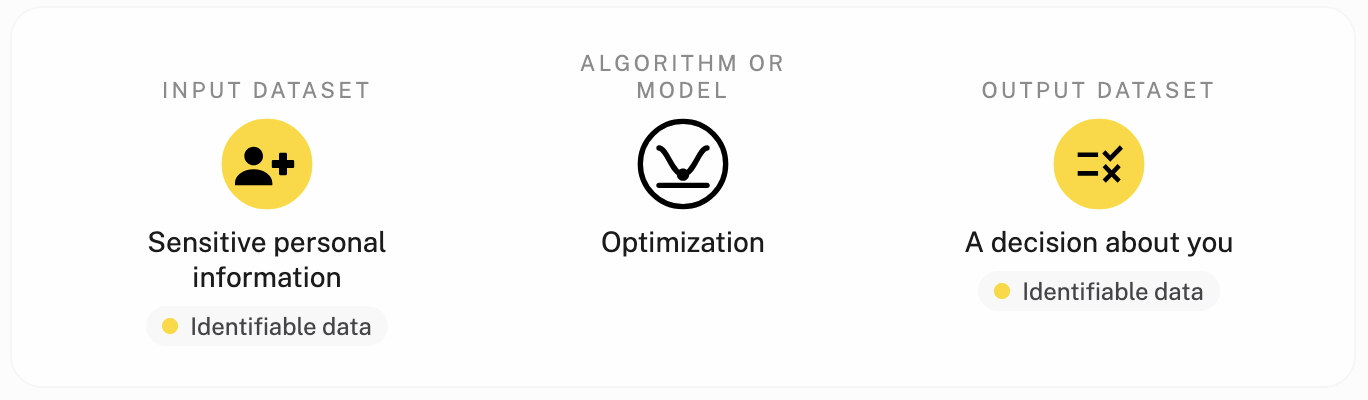
To see how these flows and taxonomies work in practice, we tested DTPR for AI's ability to translate disclosure documentation by converting all of Canada's MVP AI Register and NYC's latest Agency Algorithmic Tool Report into DTPR for AI. We did this using an agent skill we developed. You can see the results for Canada and NYC. This allowed us to take dense, compliance-focused reports and turn them into highly legible, accessible overviews for the public.
We think there is more to explore and build. For example, should AI systems be mapped out on a canvas—showing a complex web of relationships—rather than as a strict linear flow of input data → algorithm → output data? Can DTPR, its canvas and taxonomy, be converted to paper and cards to be used in interactive workshops? Could DTPR be adapted to be a tool for communities to proactively determine what kinds of AI system they would accept, vs just a tool for describing AI systems already deployed? We're working on all these questions, and more.
Explore the DTPR for AI standard
Head to dtpr.ai for the full technical documentation of the standard, including the taxonomy, categories, and elements described here.
Follow the work on DTPR for AI
We're actively developing the standard. Subscribe to get notified as new categories, tools, and case studies are released.